How small actions and connections can shape history
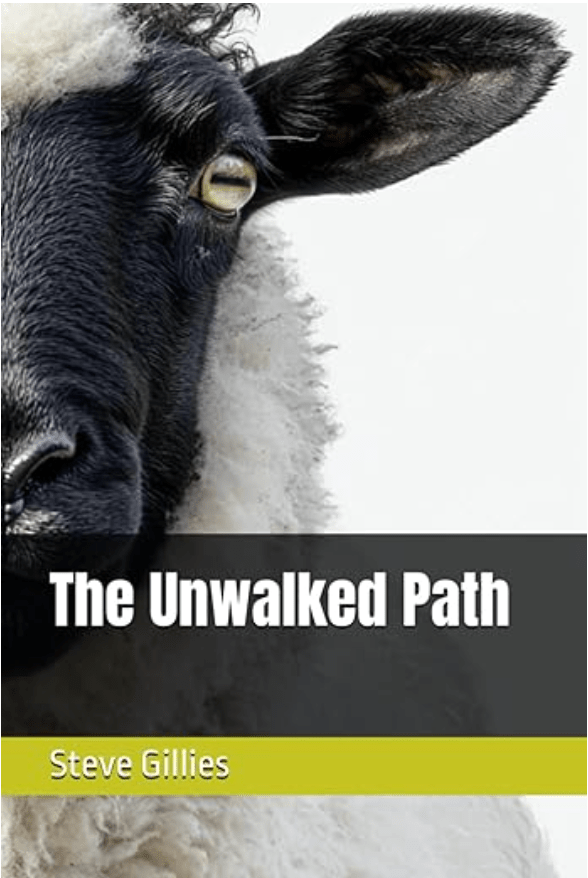
The Unwalked Path is a short fictional story where Sir Alexander Fleming visits his home town of Darvel years before he famously discovered penicillin. It is an alternative history. Something that could have happened.
Foreword
Darvel, the birthplace of Sir Alexander Fleming, sits nestled among moorland hills at the head of the picturesque Irvine Valley. It has been my home for 38 of my 68 years, and as far as I can tell, my family has lived in and around this area for generations – longer than any of us can remember.
It’s a great wee town with an interesting past, once a world leader in intricate lace design and production. Today, it’s quieter but still thrives on a strong sense of community, resilience, and pride.
It is best known as the birthplace of Sir Alexander Fleming, the man whose discovery of a miracle substance in 1928 has saved countless lives, earning him global recognition in his lifetime.
We are very proud of him. Yet the truth is, Fleming left Darvel aged thirteen, joining his older brothers in London. His childhood home, Lochfield Farm, sits five miles from the town centre, high up in the Loudoun Moor, a remote and windswept landscape. Even today, the journey is rough and unforgiving.
For locals and historians, it raises important questions: What true connection did Fleming have to Darvel? Did the town shape and influence him in important ways, or did he leave it behind with little influence on his later life?
Seeking some insight into Fleming as a man, I recently visited Frank and Ruby Donnelly, friends and near neighbours. Frank, having received in Darvel Town Hall the Fleming Medal for scholarly achievement at the age of fifteen is the one of the few who met Fleming and is still alive.
I was eager to hear his impressions, hoping for a glimpse of Fleming’s personality beyond the scientific legend.
Frank’s recollections confirmed what my research had already suggested. But the real discovery came from Ruby, who quietly disappeared upstairs and returned with cuttings of a journal by Robert Fleming, Alexander’s brother. These newspaper articles, published in the Kilmarnock Standard in 1962, had been tucked away and all but forgotten for years.
Most biographies of Fleming focus on his scientific research, the worldwide impact of penicillin, the vast number of lives saved and his subsequent fame. Most tell the story of penicillin from an academic point of view.
These articles, however, are different – a more intimate, personal recollection of Fleming’s boyhood at Lochfield. They left no doubt in my mind: his character – his observational skills, clear thinking, and analytical nature – were all shaped by the environment in which he was raised.
Robert Fleming describes Lochfield Farm, Loudoun Moor School, and the wild countryside surrounding them. A detail stood out to me.
Cadgers (hawkers) frequently visited the farm, selling small, lightweight goods – as the rough roads were only passable by pony and trap. One such figure stood out: a man with the splendid name of Cunningham McDonald, known locally as Kinny Donal.
Kinny, as it turns out, is my great-grandfather. He lived in Leloan Cottage, was twice married, and is reported to have at least 17 children – though that last detail is hard to confirm. I later learned that his reputation gained him the nickname Bull of Derval. I also learned that at least one of his children, my grannie, also attended Loudoun Moor school before it closed around 1939. It was subsequently purchased by the Fleming family (probably Robert) and visited by Sir Alexander Fleming after he became a famous world hero.
What follows is a fictional account of a visit to Lochfield Farm in 1923, five years before the discovery of penicillin. I have done my best to stay true to the facts, as far as my limited writing skills allow, to Fleming’s character, the time and the place. I have used Ayrshire vernacular in dialogue where I thought it added authenticity. However, like the Fleming brothers when they moved to London, I have had to temper its use for the sake of far-flung readers. Far flung in these parts starts at the Ayrshire boundary.
The visit to Lochfield in 1923 and subsequent tale is fictional. The facts are that Fleming was born there and his childhood was spent around the high moors above Darvel, and he did attend Loudoun Moor School before attending Darvel School and Kilmarnock Academy. Most of the characters did exist and were known to the Fleming family. In the tale Almroth refers to Sir Almroth Edward Wright (1861–1947), a pioneering British bacteriologist and immunologist renowned for his contributions to vaccination and preventive medicine. He was Fleming’s closest working colleague.
Most of my research for the tale is from the Robert Fleming memoirs. I was unable to find detailed records of Loudoun Moor School but there is a daily diary from Allanton School that stood to the east of Darvel adjacent to the Loudoun Hill Inn in the same period. So, with a little poetic licence, I’ve used these to inform my tale. Both can be read at the Discover Darvel Heritage web page.
Despite my determination to keep as close to the truth of the characters, environment and time as possible it is presented as one of the many yarns from the Sheep’s Heid, a fictional pub famed for its patrons and their wondrous story telling. The reasons for this will become clearer over time.
The Unwalked Path is available on Amazon.
@ Copyright 2026 Steve Gillies. All rights resevred.
 Steve Gillies
Leave a comment