Rumours harden into something far darker.
As Skara digs deeper into Michael Strömberg’s disappearance, a gentle afternoon by the river is revealed as the moment everything broke. A child’s laughter. A Watchmen drone. A lie that spreads faster than truth.
Part 2 peels back the Vale’s quiet surface to expose fear, surveillance, and the devastating cost of suspicion in a controlled society. Michael’s past — and his nature — come sharply into focus, while Skara’s interest begins to feel uncomfortably personal.
Snow falls. Roads close. The interview ends — but the night brings new questions.
And somewhere between nurture and programming, a knock-knock joke waits for an answer.
Some people vanish. Others were never meant to stay.
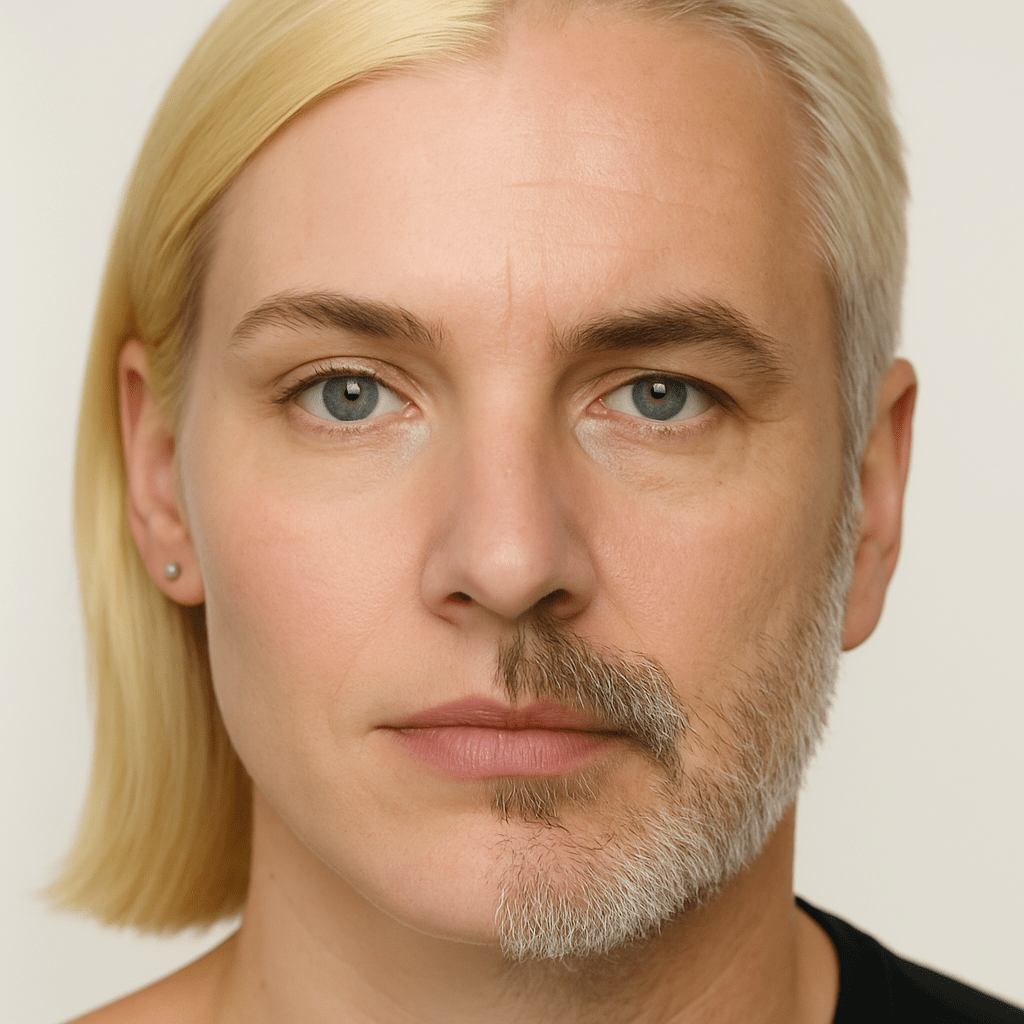
Skara looked up. “The River Business?”
Chrissie took over but seemed reluctant to tell what happened. “It was nothing really. Nothing worth the carry-on folk made of it. But you know what small towns are like – once folk start talking, there’s no shutting them up.”
“Tell me about it.”
Chrissie folded her arms. “Michael was down by the river one afternoon, doing what he always did – picking up stones, skimming them across the water. Whispering to them, like he was giving them a pep talk before he launched them across Rab’s Pool. He was minding his own business, not bothering anyone when Annie McSkimming said hello.”
“Who?”
“A local lass. She was a quiet wee thing. I only know what Michael told me after. She’d run away from home – no one knows why, but folk said things weren’t good for her. There were…rumours. Michael asked what she was doing by the river. She said it was her happy place. He told her, ‘Mine too,’ and asked if she wanted to skim stones.”
Chrissie’s mouth curved into a small smile. “According to Michael they spent a while throwing saucers across the water till their arms gave up. Then they sat on the grass. He told her knock-knock jokes that she didn’t get but laughed anyway. They watched dippers diving and fishing amongst the rocks. Annie said she wanted to catch tiddlers, so they waded in the small pools, splashing and laughing. I don’t think Michael was ever happier.”
Her voice thinned. “Then Annie pointed up and said, ‘What’s that?’”
Gavin took over quietly. “A security drone hovering above. The Watchmen. They had had eyes on Michael for weeks. Then the barked order. ‘Exit the river. Lie face-down.’ Michael, terrified, did exactly as he was told. Next thing, the thugs are on top of him, he’s cuffed, dragged and thrown into a classroom and taken to jail”.
“Classroom?”
“It’s what we used to call the vans used to transport so-called dissidents from their families to jail. They’d throw you in the back and teach you a lesson if you know what I mean”.
Skara felt a chill creep over her. She didn’t want to explain how she knew but she was certain she knew what happened next. “He froze up in custody, didn’t he?”
“Yes. Shut right down. Couldn’t speak, couldn’t explain. Just sat there, in silence. There weren’t any charges of course, he wasn’t booked or anything, but they kept him for a while before releasing him with a warning to stay away from kids. There was nothing to it, but…”
Gavin finished the thought. “But the damage was done. Rumours spread fast round here. Faster than the truth. By the weekend, folk were saying he’d somehow kidnapped the girl, that they’d been swimming naked, that he had harmed her. All nonsense – but it hurt and it stuck”.
Skara shook her head. “Poor Michael. Poor Annie.”
Gavin sighed. “It broke something in him. He stopped going to the river after that. Stopped telling jokes. Stopped laughing, too. A few days later… he was gone.”
Silence settled over them. Skara watched the fading rings on the table, the last traces of old pint tumblers, and wondered if the sound of Michaels laughter still drifted somewhere downriver, caught between the stones and the current, flowing freely between the rock pools where the dippers dive.
Skara leaned forward, knowing they were close to the end. “I can see he meant a lot to you both. Did he have any other friends?”
Gavin shook his head. “Not really. He wasn’t the type to…”
Chrissie cut in. “Well, there was Mungo, an old Labrador that belonged to Ian Fraser. Those two were thick as thieves. Whenever they met, the dog would go wild, tail thumping, turning circles, whining with joy. Michael adored him and it was clear he adored Michael. They seemed to understand each other, best buddies from the moment they first met.”
Skara glanced at the time; it was slipping away. “Before I go… tell me what you know about the day he how he disappeared.”
Gavin rubbed a thumb along the rim of his glass. “It was a Friday. A two-pint day, nothing unusual. The next thing we know he’s reported missing. His van was found burned out near Lanfine. No body, no trace. We searched for days – river, woods, everywhere. Nothing. At first, I thought it was the work of the Watchmen but as stupid and cruel as they are not even they would make someone like Michael just disappear.”
He looked up. “I never felt he had come to any harm. Just… moved on. And here’s the odd bit – the police couldn’t find a single record of him. No Michael Strömberg anywhere. No ID, no bills, no licence, nothing.”
Skara frowned. “He must’ve had something.”
“Not a thing,” Gavin said. “No Muse, no phone, no computer. Just the van and that was of no use. Forensics stripped it to the frame – no fingerprints, no hair, no DNA. Empty. Like all evidence of his existence had been wiped clean.”
Chrissie met Skara’s eyes. “That’s why I think he meant to go. It was too neat. If something had gone wrong, there’d have been mess.”
“Somebody must’ve seen him.”
“Last sighting was by Ian Fraser. Lives down on Mair’s Road, looks over Morton Park. You could try him.”
“One last question. Who do you think he was?”
Chrissie took a long breath. She knew this moment would come and she knew that what she was going to say would be ridiculed.
“I don’t know. I loved the man, in my own way. He was gentle, curious – maybe too open for this world. Sometimes I think someone used him; other times I think he just slipped away. The incident at the river may have been too much for him. I just know he was the calmest, smartest soul I’ve met.”
Her voice thinned to a whisper. “Don’t laugh, but I’ve never believed he was from here. He felt… misplaced. Like he’d stopped for a while on his way somewhere else. A wanderer.” She gave a shaky smile. “There’s a phrase that sticks with me – a stranger in a strange land. That was Michael.”
She brushed at her eyes. “Maybe he wasn’t human at all. Maybe he was here to learn – a visitor, a student, something like that.”
Skara felt a hollow flutter under her ribs — a strange, momentary sadness she couldn’t place. She steadied herself by adjusting her Thought Log, pretending she needed to check a note. Something in her gut was telling her that she had to find out what happened to Michael. It was an uncomfortable feeling, a deep ache that was going nowhere until she knew some answers.
October 2073. One Year Earlier.
Nights in the Vale carry a quiet and a darkness you don’t find anywhere else. The ancient hard woods of Lanfine forest rise steeply on the hills to the south of the river. A perimeter of rowan trees protects the estate from mythical creatures and absorbs the unexpected sounds of the night.
Michael likes the night. He is sitting by the water long after the lights in town have gone out. Long after the siren has announced the start of the nightly curfew. 10pm. Beyond which the people of the Vale are not to be trusted.
He lazily throws stones just to hear the gentle plink as they skip across the dark waters. He whispers a joke to no-one.
Knock-knock…
No answer but the river. No-one laughs
He wasn’t sure what he was feeling. Fear? Anger? A strange, rising frost beneath his ribs. Not anger. Not sadness. Something he didn’t have a name for. He would press his palms together, waiting for it to pass.
Edges started to sharpen. The picture slowly clearer step by step. Michael started to understand who he was.
I hate the Watchmen. And their stupid Synths.
He detected a twig snap behind him; a deer’s careful steps. Without looking he said “I didn’t mean to frighten you. I won’t hurt you. You’re okay. I only want things to be quiet again.”
The deer stayed a while. Michael told it about Annie. About how happy he was in the Vale. About how he felt connected to the present and to the past and that he felt he would be connected to its future somehow.
But, for now, he would have to leave. His instructions were stronger than his instincts. His coding overruling what he had become. His network overriding his desire. Before parting into the night, he whispered. The dream shall never die.
Nurture versus nature. Acquired data versus programming.
The Heid. The interview is near conclusion.
It was only mid-afternoon, but Chrissie was tired. The interview had drained her. Over the last year she had tried to put Michael out of her thoughts. Re-surfacing her feelings was intense and unexpected.
Turning toward the window, she said, “Look.”
Skara followed her gaze. “Oh… snow.”
“Aye – and heavy with it. It’s lying already.”
Outside, the street had vanished into snow white. The lamplight hung in halos. Flakes tumbled thick.
“I need to go”, said Skara.
Gavin checked his Muse, then shook his head. “Sorry but the road is closed further down the valley. Looks like your stuck. It’s too deep already.”
A prickle of unease went through her. The thought of being stuck overnight felt stranger than it should have. “What am I going to do?”
Chrissie waved a hand. “You can stay here, love. We’ve a spare room upstairs.”
“Are you sure? I don’t want to be any bother. That’s really kind – I’ll pay, of course.”
“No need. We’re glad of the company. And maybe, between us, we’ll make sense of this story yet. I’d like to think Michael’s still out there somewhere – safe and happy. Maybe you being stuck here was meant to be.”
Skara smiled, the tension easing from her shoulders. “Thank you. I’ll gather my thoughts then head down to see Mr Fraser in the morning – if that’s all right.”
“Perfectly.” Chrissie studied her for a moment. “You know, there’s something about you that reminds me of him. I think you’d have got on well. I hope you don’t mind me asking but was Michael your brother?”
“No. My brother was…well, it’s a long time ago and I’d rather not discuss it.” For the second time this evening Skara noted Chrissie’s instinct.
“Of course. I’m sorry, I didn’t mean to upset you”.
“It’s okay. It was a long time ago, but it still hurts. As I said I don’t want to talk about it, not today. I tell you what I do want.”
“What?”
Skara grinned. “Beer. Do you know where I can get some?”
Chrissie laughed. “Well, that’s one thing we’ve plenty of. We can drink beer through to curfew and beyond if you like.”
The three of them laughed, the sound warm against the hush outside. Snow kept falling, thick and steady. Somewhere in the distance, a bell marked the hour, and for the first time all evening, for the first time in a long time, Skara felt like she was where she wanted to be.
Gavin and Chrissie met in the last, bitter months of the war – a time when the government in London was determined to starve the uprising out of existence.
Weapons were hard to obtain, access to power scarcer still. Entire regions of Scotland were ‘dark-zoned’, cut off from the national grid as punishment for harbouring rebels. The Watchmen swept through the Central Belt with methods disturbingly reminiscent of the Highland Clearances: identifying dissidents, rounding up rebel leaders, removing whole families from their land.
The 2050 Movement for Scottish Independence began, at first, with an atmosphere familiar to the hopeful tensions of 2014. Town squares filled with blue-and-white banners, crowds debated currency and governance, and families once again found themselves divided across kitchen tables.
But beneath the surface there was something new—an unmistakable brittleness in the political climate. The UK Government had shifted sharply towards an authoritarian model. It no longer relied solely on conventional policing or the military. Instead, it was increasingly enforced by the Watchmen, supported by the first generation of humanoid Synths.
At the beginning, Scotland’s renewed push for independence was peaceful. Rallies were orderly; negotiations, though tense, continued in public. But Westminster’s position was absolute: no second referendum, and no tolerance for sustained public pressure. When tens of thousands defied restrictions, the Watchmen and their bulldog Synths were deployed for the first time in a domestic front. Their presence changed everything.
The crackdown was swift and theatrical. Curfews imposed. Digital communications throttled. Drone-based monitoring extended over cities and major transport routes. Protesters were detained under newly expanded National Security statutes. Civil liberties that had survived centuries of political turmoil were stripped away within weeks.
In Scotland, the sense of being governed with permission was replaced by the reality of being governed under occupation.
The rebels fought back, but without national leadership. Some targeted infrastructure; some targeted Watchmen patrols; some operated only defensively to protect their communities. The UK Government used every attack to justify further suppression.
By the late 2050s Scotland was effectively placed under emergency powers. Parliamentary authority in Holyrood was dissolved ‘temporarily’ for stability reasons. Watchmen command centres were established in major cities, outposts and in every town and village.
Synth deployment was increased dramatically, the technology improving year on year. Movement between regions required permits. Public gatherings of more than twenty people were restricted unless sanctioned in advance.
By 2060 the uprisings had been brutally, methodically quelled. What remained of Scotland’s resistance was scattered: a few cells hiding in plain sight, encrypted messages on shadow networks, anonymous acts of sabotage carried out in the name of a free nation that no longer had the means to fight openly. The UK Government declared the ‘Scottish Secession Crisis’ resolved – not even Westminster had the brass neck to use the word peace.
In its place stood a subdued nation. Stood? Cowered.
The rebels hid and made plans. Hiding in plain sight could be achieved in many ways. For Gavin and Chrissie, it was being landlords of the Sheep’s Heid.
Gavin had been a field engineer – one of the few who understood how to splice failing micro-reactors, repurpose agricultural drones into message couriers, and keep the rebel encampments powered while the grid went dark around them.
Chrissie had started as a frontline medic, patching up injured fighters with diminishing supplies, but quickly became something more: a military leader, a strategist, someone the fractured rebel cells trusted. It was Chrissie who coordinated the relocation of wounded fighters under constant surveillance; it was Chrissie who brokered fragile alliances between groups who barely trusted one another.
They met during a raid, when a Watchmen detachment cut off a supply caravan Gavin was escorting. Outnumbered and outgunned, Gavin expected the usual fate – arrest, interrogation, disappearance.
Instead, a ragged convoy of rebel bikes burst from the treeline, Chrissie at the front, face streaked with engine oil and rain, her medic’s armband tied around her forearm like a badge of defiance. She hauled Gavin onto her bike as the convoy peeled away under tracer fire. He always said she saved him twice that night – once from the Watchmen, and once from the despair that followed the collapse of the resistance.
But the collapse did come. The final government offensive broke what remained of the rebel command. Watchmen forces began the ‘roundings’: systematic sweeps to identify, arrest, or erase every remaining rebel leader. Gavin and Chrissie were both on the lists.
They escaped only because Chrissie remembered something her grandfather used to say — If you want to stay hidden, hide in plain sight.
They drained the last of their pooled rebel funds, purchased the Sheep’s Heid, and overnight reinvented themselves as its new landlords. The townsfolk whispered, but nobody spoke. The Watchmen saw two weary publicans trying to revive a war-torn bar: nothing more.
Behind the façade, though, the Heid became something else. A listening post. A sanctuary. A remnant cell disguised as hospitality. Gavin rebuilt old comms gear in the cellar, coaxing life from scavenged circuits. Chrissie cultivated networks — quiet conversations, subtle alliances, people who still believed Scotland’s independence hadn’t died on the battlefield.
They made a vow on their first night as landlords: their purpose was no longer open rebellion – that was suicide under Watchmen rule – but disruption, patience, and opportunity. They would wait for a crack in the armour. A weakness in the government’s chokehold. A spark they could help ignite.
Every pint served, every traveller welcomed, every story overheard was part of the work.
Because Gavin and Chrissie knew the truth: revolutions don’t end. They hide, they change shape, and sometimes…they wait for someone extraordinary to carry them forward.
Getting ready for bed, Chrissie asked “What do you make of our new friend?”.
“She seems a good lass,” Gavin said, pulling off his boots. “Not sure why she’s so keen to dig into Michael, but she feels genuine enough.”
“I’m worried?”
“About Skara?”
“Yes, and what she might find out about Michael.”
“You had to be very close to Michael to know what he was.”
“I know. It’s not him being a Synth that worries me. If she finds out what Michael was becoming before he left us”.
Michael’s sudden disappearance was a devastating blow to the cause. Faced with a military power they could never challenge it had long been their dream to somehow influence the Synths. The only way ahead was to turn the Synths against their masters. Michael wasn’t the answer, but he had shown the way – he had shown that even man-made slaves could develop rebel sympathies.
Chrissie hesitated. “Did you notice anything… unusual? Or familiar about Skara?”
Gavin looked up. “Familiar how?”
“I don’t know,” she said, though her voice suggested she did. “I just had the impression she knows more about Michael than she’s letting on.”
“Maybe.”
“Did you see how she drank her beer? Just like Michael.”
Gavin snorted. “Are you mad? She sipped one pint over an hour.”
“No, not how fast.” Chrissie shook her head. “How she looked at it—studied it—appreciated it – and held the glass with both hands. Exactly like he did.”
Gavin paused. “Now that you mention it…”
“And when you told her about the crash at the Corner—did you hear what she said?
Oh God.
“So what?”
“Michael said the same thing once,” Chrissie said softly. “Then he looked terrified—like he wasn’t sure if he was allowed to say it. He told me he didn’t want to offend anyone, that he’d only heard other people use the phrase. I had to reassure him it was fine, but it made him anxious.”
“Michael said that?” Gavin asked, eyebrows rising.
“Yes. And when Skara said those same words tonight, I saw the same look—the same tension. Like she was fighting something inside her.”
Gavin sat on the edge of the bed and reminded her gently, “Michael was a synth.”
“I know,” she said. “And… well, I just get the same feeling from her.”
“Really? No. She can’t be. Michael was near perfect. We—well, you—only found out because he confessed. Michael didn’t want to be a synth. He wanted to tell jokes, make people laugh, make them feel happy. If Skara’s a synth, then she’s flawless. Did you see how she rubbed her eyes from the fire smoke? It left a mark on her cheek.”
“I know,” Chrissie said again, but uncertainty crept in. “I’m just telling you—I get the same vibe from her as I did from Michael. I’m worried she finds out who Ian Fraser really was.”
Gavin was quiet for a moment. Then he said, “You think she is a spy?”
 Steve Gillies
Leave a comment